Attention as love: A reflection on prayer in the Christian life
Opinion
Recently I came across the following quote: “The novelist and moral philosopher Iris Murdoch, in her work on moral philosophy The Sovereignty of Good, writes, ‘Prayer is properly not petition, but simply an attention to God which is a form of love’.”

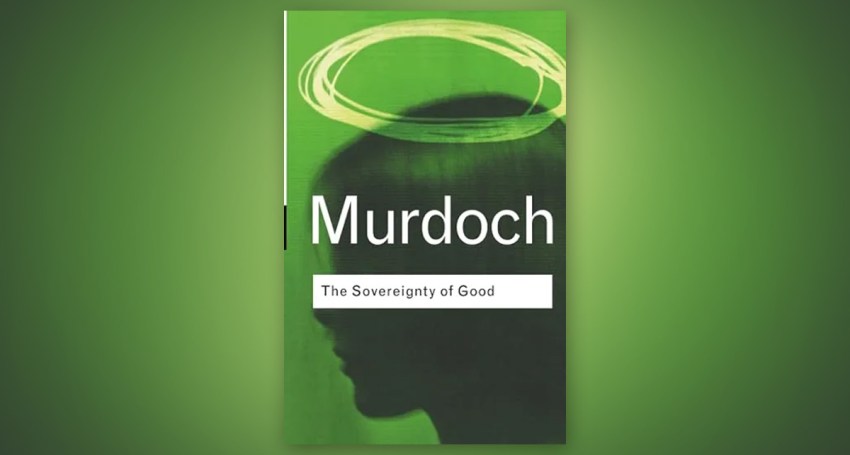
It is a striking claim, not least because Murdoch herself stood at the edge of Christian belief rather than within it. Yet she saw something that Christians can too easily forget: that the heart of prayer is not asking but attending. Before prayer is speech, it is presence. Before it is request, it is regard.
Most of us learn to pray as petitioners. As children we ask God to bless those we love; as adults we ask for healing, guidance, employment, peace. There is nothing wrong with this.
Jesus himself taught his disciples to ask for daily bread and the Psalms are full of urgent, even desperate, pleading. Petition belongs to prayer because dependence belongs to the human condition.
Yet Murdoch’s insight is that petition is not the essence of prayer. If prayer were only asking, God would be reduced to a means to our ends, a cosmic supplier of goods. Prayer would then be a transaction and its success would be measured by results. In our world we stand in danger of reducing prayer to simply this. Anyone who has prayed for some time knows how quickly that model collapses. Prayers go unanswered, or are answered in ways we did not want, and if petition is all we have, faith begins to fray.
Attention is different. To attend to God is simply to turn toward God, to hold God in the gaze of the mind and heart, expecting nothing in particular except God himself. Murdoch borrowed the idea of attention from Simone Weil, who called it “the rarest and purest form of generosity”.
To attend fully to anything: a person, a landscape, a piece of music, is to forget oneself for a moment, to let the reality of the other displace the clamour of the ego. This, Murdoch argued, is the beginning of the moral life: we behave badly largely because we see badly, because the “fat relentless ego” distorts our vision. Attention purifies sight. And prayer, as attention to God, purifies it at the deepest level, because in prayer we attend to the source of all goodness itself.
This is why Murdoch can say that such attention is “a form of love”. Love, at its truest, is not primarily an emotion but an orientation, a sustained looking toward the beloved that gradually reshapes the one who looks. We become like what we behold. The person who spends time in the presence of God, simply attending, is slowly conformed to what he or she contemplates.
Paul says as much: “we all, with unveiled face, beholding the glory of the Lord, are being transformed into the same image from one degree of glory to another”. Prayer understood this way is not a technique for changing God’s mind but the ordinary means by which God changes ours.
The Christian tradition has always known this, even when popular piety has forgotten it. The old catechisms defined contemplation as “a simple loving gaze upon God”. The desert fathers spoke of prayer as the mind’s rest in God. Brother Lawrence, scrubbing pots in a monastery kitchen, called it the practice of the presence of God.
The peasant of Ars, asked by his curé what he did during his long hours before the tabernacle, answered simply: “I look at him, and he looks at me.” That sentence may be the most complete theology of prayer ever uttered. Nothing is requested; nothing needs to be. The looking is itself the love.
Such prayer matters in the Christian life precisely because it addresses our deepest ailment, which is not a shortage of goods but a disorder of attention. We live distracted, curved in on ourselves, our gaze fractured by anxiety, ambition, resentment, and now by the endless flicker of screens engineered to harvest the very attention Murdoch called a form of love. In such a world, to sit quietly before God, attending to God for even ten minutes, is a countercultural and almost defiant act. It declares that God is real, that God is worth looking at, and that we are not the centre of the universe. It is, in the truest sense, an act of worship.
And here the paradox emerges: attention does not abolish petition; it heals it. When we have first attended to God, to God’s holiness, God’s patience, God’s mercy, our asking changes. We stop presenting God with shopping lists and begin to want what he wants. “Thy will be done” ceases to be resignation and becomes desire.
Jesus in Gethsemane petitions with utter honesty: “let this cup pass from me”. Yet the petition rests inside a deeper attention: “nevertheless, not as I will, but as you will.” The asking is real, but the attending governs it. That is prayer in its wholeness.
For the ordinary Christian, then, Murdoch’s sentence is less a definition than an invitation. It invites us to pray even when we have nothing to say, to believe that silence before God is not wasted time but the very substance of love. It frees us from measuring prayer by eloquence or outcomes. It asks only that we turn up and look.
In a life shaped by such attention, the fruits appear almost unnoticed: patience where there was irritation, clearer sight of other people, a loosening of the ego’s grip. We will still ask, because we are creatures and children.
But beneath every request will run the quieter, sustaining current of prayer as Murdoch understood it: simply an attention to God which is a form of love, and which, over a lifetime, makes us capable of loving at all.
This is what we do each time we celebrate the Eucharist, enabling us to always know that God is Good, Good indeed.