The rage beneath: anger, the self, and the gospel of peace
Opinion
I was at a confirmation recently and someone asked “Why are people so angry these days?" It was the kind of question that stops you. Not because it is unanswerable, but because it is so honest and because the person asking it clearly already knew that something had shifted.

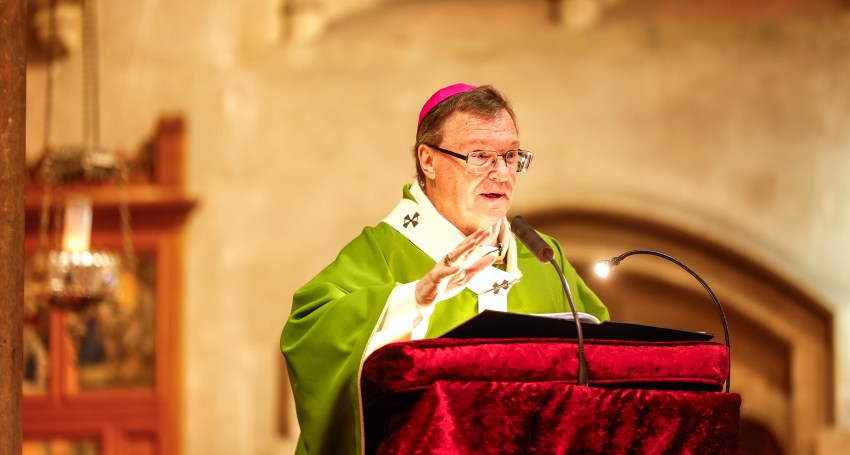
My dear sisters and brothers in Christ, I was at a confirmation recently and someone asked “Why are people so angry these days?”
It was the kind of question that stops you. Not because it is unanswerable, but because it is so honest and because the person asking it clearly already knew that something had shifted. Something in the air, in the tone of public life, in the way people speak to one another, or shout at one another.
It is a question worth sitting with. We live in an age of extraordinary anxiety. Less often examined, however, is what anxiety does when it has nowhere to go. It curdles. It turns inward, and then, with surprising force, outward. It becomes anger.
Scroll through any social media feed; sit with any news broadcast for more than 10 minutes; observe the fractiousness of public debate or simply notice the temperature in a supermarket carpark. Something is not right. It would seem that people are angrier than they used to be, or at least they are expressing it more readily, more publicly and more intensely. It would seem that we have become a society that is quick to take offence, swift to assign blame, and slow to extend the benefit of the doubt. The question is not simply political or sociological. For those of us who take the Gospel seriously, it is also profoundly spiritual.
Our Christian tradition has always had a complex relationship with anger. It is not, in itself, a sin. The Gospel records that Jesus himself was angry, and the anger was righteous: he overturned the tables in the Temple; he called out the hypocrisy of those who laid heavy burdens on others while touching none themselves. Our tradition distinguishes between anger in the service of justice and the kind of anger that corrodes the soul. Saint Thomas Aquinas recognised that a person who felt no anger at genuine wrongdoing might be morally deficient, lacking what he called the zeal that justice requires.
And yet our tradition is equally insistent that anger becomes disordered when it seeks not to correct wrong but to punish, humiliate, or simply discharge its own energy. The Desert Fathers, those early monastics who understood the human heart with an unsettling clarity, treated anger as one of the most dangerous of the eight destructive thoughts that drive us away from God and from each other. Evagrius of Pontus wrote that anger clouds the mind and blinds the eye of the heart. He was not being merely metaphorical.
So why are so many people so angry now? The answers that are usually offered are real enough: economic insecurity; cost of living crisis; political polarisation; the algorithmic incentive structures of social media that reward outrage over reflection; the loss of shared narratives and institutions that once held communities together. All of this is true. But I want to suggest that there is a dimension to contemporary anger that runs deeper, and that our Christian tradition illuminates it in a way that other frameworks do not.
Much of the anger we see in public life is a projection. It is not, at its core, anger at politicians, or at refugees, or at corporations, or at ideological opponents, or even the Church. It is anger at oneself, dressed in other clothes and sent out into the world. The philosopher Simone Weil observed that affliction, when it is not transformed, is transmitted. We do not escape our wounds by ignoring them; we pass them on. The person who has not made peace with their own failures, their own disappointments, their own frightened and fragile interior life, is a person primed to find enemies. The world obliges by providing a plentiful supply.
This is not to say that the objects of anger are never genuinely culpable. They often are. Injustice is real and it deserves a response. But the intensity and the quality of much contemporary anger suggests something else is going on. The fury seems disproportionate. The need to win, to destroy, to humiliate is too great. That is the signature of anger that is serving a private purpose, not a public one. It is the anger of people who cannot bear to sit with themselves.
The Gospel proposes a different path, and it is not the path of suppression. The spiritual life does not ask us to swallow our anger and smile. It asks us to do something far more demanding: to become honest about what lies beneath the anger, to bring it into the light of prayer and of trusted relationship, and to allow it to be transformed rather than simply redirected. The Psalms are a masterclass in this. The Psalmists are furious, frightened, despairing, and envious. They say so, at length and without embarrassment. But they say it to God. They do not take it out on their neighbours.
The practice of an examination of conscience, sometimes called the examen, so central to our Catholic tradition, serves this same purpose. It invites us regularly to look at the state of our interior life, not in a spirit of morbid self-punishment, but with the honest gaze of someone who wants to be well. When did I become disproportionately angry today? What was I really reacting to? What fear, what wound, what unmet need was being triggered? These are not comfortable questions, but they are humanising ones, ones that reflect that we are made in the image of God.
And then there is the discipline of forgiveness. Not the cheap forgiveness that papers over genuine hurt, but the costly and liberating forgiveness that Jesus both modelled and commanded. Forgiveness does not deny that a wrong was done. However, it refuses to allow the wrong to have the last word. It refuses to let the person who hurt me continue to live rent-free inside my head, shaping my reactions and narrowing my world. Forgiveness’ supreme expressions are, of course, the Eucharist and the Sacrament of Penance.
The remedy for an age of anger is not, finally, a political programme, though good politics can help. It is the ancient spiritual work of self-knowledge, prayer, honest community, and the grace to be forgiven and to forgive. That is not a retreat from the world. It is the most demanding and the most necessary engagement with it, always remembering that God is good, good indeed.