“The first – and only – book I’ll ever write”
Editorial
One Wednesday lunchtime a few weeks ago a 78-year-old man walked into reception at the Catholic Diocesan Centre on Wakefield Street.
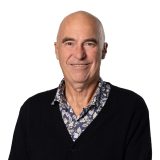
He wanted to know if he could place an ad in The Southern Cross and could he see the rate card, please.
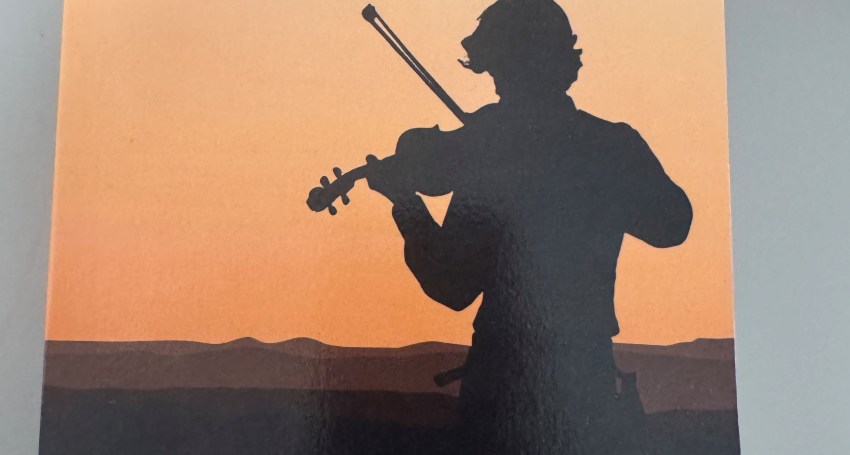
John Clancy had written a book, his first, and “the only one I’ll ever write,” he said.
John’s life, as much as I could make out, had been peripatetic, a music teacher who’d lived in Cork in Ireland, the Bahamas, Hong Kong, Perth and for some time, Bendigo.
He’d completed a masters degree at Flinders University at the tail end of Covid and which, along with his life experience, prompted him to write his book, a fictional affair based upon his family history over the past 400 years. He called it ‘A Bard on the Pampas’ A story of Irish migration to Australia.
It’s 426 pages long with, I’d guess, about 120,000 words all up and took him “three or four years’ to write.
John is a sprightly man and was off to meet friends in Bridgewater the next day. They’d walk to Hahndorf from there, he said. He’d done a good part of the Heysen Ttrail before and it didn’t seem to faze him.
He was off to the opera on Friday and then, incongruously, was heading to Norwood Ttown Hall to listen to the folk singer Ralph McTell on Saturday.
“Oh, yes,” he said when I expressed some (serious) surprise that Ralph – well known six decades ago for his song ‘The Streets of London’ – was still alive.
John’s book is published by a small Adelaide publisher that operates some genre of hybrid publishing where the author contributes financially and books are printed as demand comes in. It’s not an unusual model nowadays and, on the plus side, allows first-timers such as John to get a book out.
His book has been available since January and has sold 100 copies to-date, he told me and I sighed inwardly. I’ve glanced through, more than read it avidly, but the book stacks up well.
“About 30,000 Irish people emigrated to Argentina,” John said “But no-one knows about them”.
Spanish is John’s second language and which had helped him enormously when researching his book. When he pays off the debt he incurred in getting the book out, he’ll give the profits to a registered Australian charity he said.
Caritas sounds good he ventured. “Yes they are indeed,” I said. John wasn’t clear on this aspect of his endeavour but his good intentions are honestly held and you can count on him, I’m sure.
The book, sadly for sales, is a niche read but that aside, is a goodie. Nicely written, it flows well and you’ll learn something.
“You might find some typos,” he said but I haven’t and don’t expect to either.
The reason I’m writing about John is that minutes before he wandered in, I’d been reading a book review by Paula Byrne in the UK Sunday Times called Converts, which reflects on the many British writers and artists who joined the Catholic Church in the 20th century.
The review begins with Evelyn Waugh’s Brideshead Revisited where Charles Ryder remarks that Catholics appear “just like other people”. He is corrected by Sebastian Flyte.
“My dear Charles, that’s exactly what they’re not … they’ve got an entirely different outlook on life.”
Waugh, the review says, tells us that modern Catholicism “is not a mere private devotion but a fully formed, alternative moral and metaphysical order. Melanie McDonagh’s Converts: From Oscar Wilde to Muriel Spark, Why So Many Became Catholics in the 20th Century examines precisely this: the men and women for whom Catholicism provided not only sanctuary but an entirely different way of seeing”.
McDonagh reckons that between 1910 and 1960, more than 500,000 people in England and Wales converted to Catholicism, a surprising perhaps figure given the pressures of secularism and the lingering suspicion of ‘popery’ in British public life.
Her case studies cover literary converts such as Waugh, Graham Greene and Muriel Spark as well as figures on the margins of notoriety and piety from Oscar Wilde and Lord Alfred Douglas to John Henry Newman, the former Anglican theologian canonised in 2019.
The book gives a lovely tale about Graham Greene (put forward by The Catholic Weekly newspaper last month as perhaps the 20th century’s greatest novelist). Greene’s conversion was an intellectual reckoning with sin, guilt and moral responsibility the book says but during the WW2 blitz on London, he became more emotionally attached to the Church.
McDonagh recounts his favourite story. After a pub was bombed, the landlord and his family sheltered under a billiard table. A priest crawled in to hear their confessions. Suddenly a voice called out: “Who’s that?”
“I am a Catholic priest and I am under the billiard table hearing confessions,” the priest replied.
“Stay where you are a moment, Father,” the unseen voice said, “and hear mine too”.
The lesson here, I guess, is that Catholic writers are, among many variants, a diverse lot indeed.
John Clancy fits that model well. His book is for sale on Amazon but you can get it direct from him at johnann.clancy@gmail.com he said.
Ads are our bread and butter at The Southern Cross but we didn’t ask John to take one out, despite his interest.
Sometimes, the stories are enough.