Getting to the heart of it
Local
The Major Relic Pilgrimage brings St Carlo Acutis to Adelaide during August. KATIE SPAIN explores his extraordinary journey from tech-savvy teen to Saint.

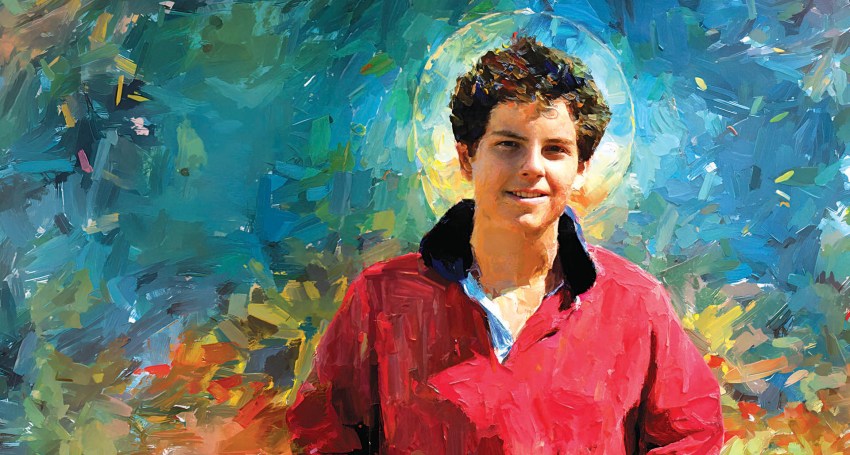
A teenager in sneakers, jeans and a hoodie is not the image most people conjure when they think of a saint. Yet thousands of Catholics around the world find inspiration in St Carlo Acutis, the Italian teenager who died at just 15 years of age and became the first millennial saint when he was canonised in 2025.
When Carlo Acutis, who had acute promyelocytic leukemia, died in 2006, the teen was known for his deep devotion to the Eucharist and a knack for using technology for evangelisation. His most famous project was an extensive online catalogue documenting Eucharistic miracles from around the world. His mission was simple: to help others discover the real presence of Christ in the Eucharist.
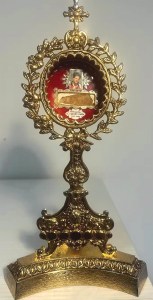
It is an extraordinary story and one South Australians will have the chance to learn more about when a portion of his heart muscle (pictured) travels to Adelaide for veneration from 6 to 9 August 2026.
The Major Relic Pilgrimage begins its journey through Adelaide with a reception of the relic, a Mass for the Transfiguration, and night prayer at St Francis Xavier’s Cathedral on the evening of 6 August.
Over four days it will continue at Payneham’s Our Lady Queen of Peace Church, and Our Lady of the Boat People Church in Pooraka before the Veneration concludes at St Francis Xavier’s Cathedral on the evening of 9 August. A Eucharistic Miracles exhibition will also be on display at all venues.
There will certainly be plenty to reflect on. Carlo died young but his impact on the world around him was long-lasting.
In an age dominated by screens, social media and constant digital noise, Carlo’s life offered something surprising and deeply reassuring.
In many respects he was an ordinary teenager. He loved computers and technology, built websites and played video games. But at the centre of it all was a profound love of Jesus in the Eucharist.
As St Carlo’s relic travels around Australia, drawing pilgrims, school groups and parishioners eager to learn more about the young saint, many people are asking a simple question: what is it about Carlo that resonates so deeply with modern Catholics?
Perhaps the answer lies in the fact that he never set out to be remarkable. Born in London in 1991 and raised in Italy, Carlo attended daily Mass from the age of seven, prayed the Rosary each day and spent time in Eucharistic adoration.
At the same time, he enjoyed football, computers and spending time with friends. His faith was not confined to church walls. He used his own money to buy food and sleeping bags for people experiencing homelessness.
At school he defended classmates who were bullied. He also avoided gossip while trying to live simply. Long before digital evangelisation became commonplace, Carlo recognised the potential of the internet as a tool for sharing the Gospel.
“The Eucharist is my highway to Heaven,” he famously said.
That conviction continues to inspire Catholics across generations. Carlo’s path to sainthood followed the same process as every canonised saint. The Church carefully examines a person’s life, virtues and reputation for holiness. Canonisation also requires two miracles attributed to the saint’s intercession after death.
The miracle leading to Carlo’s beatification involved a young Brazilian boy suffering from a rare pancreatic condition. Following prayers seeking Carlo’s intercession, the child experienced a complete and medically unexplained recovery.
The second miracle, which paved the way for canonisation, centred on a young woman in Costa Rica who suffered a severe brain injury after a bicycle accident. After her mother prayed at Carlo’s tomb in Assisi, the woman made a rapid and unexpected recovery that doctors could not fully explain.
For Catholics, however, sainthood is about much more than miracles. Carlo often reminded people that holiness is not reserved for a select few.
“You too can become a saint,” he said.
His message reflects one of the Church’s most important teachings: the universal call to holiness.
Every Christian is called to become a saint through ordinary acts of faithfulness, charity and love. This understanding also helps explain why relics remain an important part of Catholic devotional life.
For some people, the idea of venerating relics can seem unusual or even confronting. Yet relics are not worshipped, nor are they regarded as possessing magical powers. Rather, they are tangible reminders of lives transformed by God.
The Church makes an important distinction between adoration and veneration. Adoration belongs to God alone. Veneration is a gesture of respect shown towards those who have faithfully followed Christ.
Relics are commonly described according to three categories. First Class Relics are the physical remains of a saint, Second Class Relics refer to items personally owned, used, or worn by the saint, and Third Class Relics are any object that touched a first- or second-class relic or the saint’s tomb.
Relics help connect believers with the communion of saints and encourage them to pursue holiness in their own lives. Just as families treasure photographs or keepsakes belonging to loved ones, relics provide a physical connection to men and women whose lives reflected the Gospel in extraordinary ways.
The bodily relics of saints also point towards a central Christian belief: the resurrection of the body. Catholics profess not only Christ’s resurrection but also the hope that all people are called to share in
eternal life. Seen through the eyes of faith, relics are not reminders of death but signs of the promise of resurrection.
Today, St Carlo’s major relics remain in Assisi, where pilgrims continue to flock to his tomb. They are preserved and distributed under strict Vatican guidelines ensuring their authenticity and reverent use.
Other authenticated relics are housed in churches around the world, including 10 relics in Australia. One permanently resides at Our Lady Queen of Peace Church in Payneham.
For many who come to pray before a relic of St Carlo, the attraction is not curiosity but inspiration. His life demonstrates that holiness can flourish in the modern world. It can be found in classrooms and homes, on smartphones and computer screens, in friendships, family life and everyday acts of kindness.
Perhaps that is why his story continues to capture hearts. Carlo understood that the Eucharist was never simply an end in itself, but a pathway to deeper union with God.
“To always be close to Jesus,” he said. “That’s my life plan.”
For Adelaide’s full Major Relic Pilgrimage itinerary, locations and times visit adelaide.catholic.org.au
How to venerate relics?
In the First Commandment (Exodus 20.3), God says “you shall have no other gods before me”.
How do devotional practices, such as the veneration of relics reconcile with the commandment to worship God alone?
Devotional practices must be properly understood and experienced as an extension of the liturgical life of the Church.
They need to advance the knowledge of the mystery of Christ and not become permeated by superstition (Constitution on the Sacred Liturgy, 13).
It is helpful to understand the classical distinction between adoration (latria) and veneration (dulia) when it comes to venerating relics.
Adoration (latria)
- Worship due to God as the Creator
- Genuflection
- Reserved for God in the Most Blessed Sacrament and for the Holy Cross from the solemn adoration during Good Friday until the beginning of the Easter Vigil.
Veneration (dulia)
- A sign of reverence or respect shown to a created person
- Bow your head, kiss or touch the relic or case in which the relic is held (called a reliquary)
- Relics are often born in procession, shown to the sick or dying, and are an impetus for asking the intercession of the saint for healing.
- If the faithful are blessed with the relic, they should kneel during that blessing.