Other sides of the Synod
Local
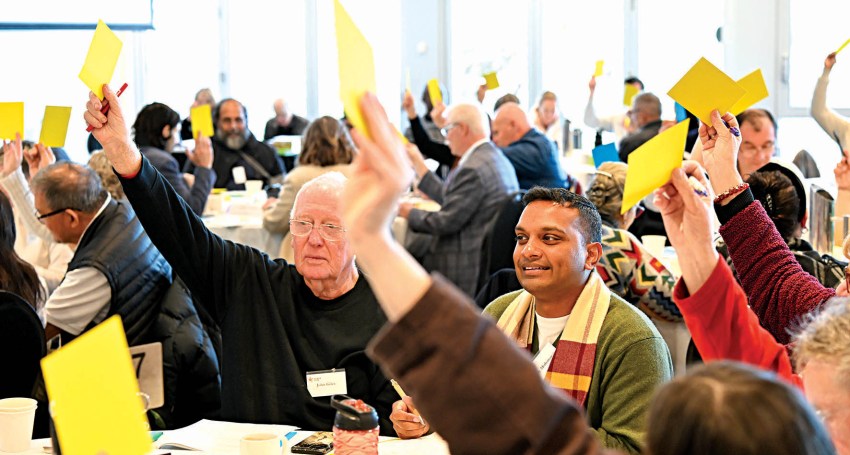
In the 12 months leading up to the two plenary sessions of the 2026 Archdiocese of Adelaide Synod, a 12 member preparatory commission gathered every few weeks to discuss and shape the direction of the inaugural event.
The commission, chaired by Vicar General Fr Dean Marin, was made up of members of the clergy, several experienced and senior lay people and some employees at the Archdiocese.
What struck me was how attitudes towards the Synod – what it meant, why we were holding it and its potential – changed over the past year. It is a personal reflection only but the vision of the Synod as an ongoing, living and ever-changing entity is enduring.
The two Synod sessions which led to the working document being presented to Archbishop Patrick O’Regan, are merely the start of much hard work that will come with its implementation.
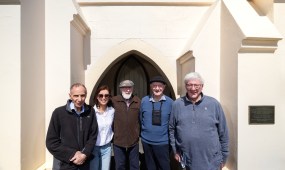
Once the sessions were done, four members of the preparatory commission were asked just what they thought about the 2026 Synod.
1. Have your thoughts on what the Synod means changed over the last 12 months? If so, how?
I have come to see the Synod less as a process for reaching decisions and more as a way of being Church. A spiritual exercise in learning how to communally listen to the voice of the Holy Spirit. To do so requires not shouting over each other as in secular forums but depolarised dialoguing to discern the sensus fidei.
– James Ellery (senior lay worker)
At first, I saw the Synod as a way to encourage and guide change or reform, leading to clear action plans. Over time, I have come to understand how diverse Catholics in Adelaide and around the world are in culture, education and upbringing. Through conversations with members of the preparatory commission and the Synod, I have gained a deeper appreciation of the faith, friendship and cooperation within the community. Even where we disagree on some of my hopes, such as inviting women to the priesthood and making priestly celibacy voluntary, I have experienced a caring and tolerant environment where different views are welcomed and thoughtfully considered.
– Andrea Bassan (senior lay worker)
When the Preparatory Commission first met last year, we quickly acknowledged that no one around the table had organised a Synod before and we would all need to learn and grow toward the 2026 Synod. We were however standing on the strong foundations of Diocesan Assemblies, the Plenary Council and the Synod on Synodality in Rome as well as the research and knowledge of senior leaders in the Archdiocesan Office. These strong foundations quickly allowed us to move from ‘What do we have to do?” to “What could we do?” which encouraged us to explore big ideas alongside practical planning issues. Big ideas like Dialogue Week and others emerged from discussion around the table and were successfully executed by teams, parishes and communities across the archdiocese.
– Monica Conway (Chair Diocesan Pastoral Council)
My awareness of the way the Synod works is far clearer than when we began. My first thoughts were a fear that it sounded a bit ‘woolly’. This was soon dissipated as we worked through the retreat and the first session. As someone said, we have to work through the Synodal way in order to understand it.
– Fr Mark Sexton
2. Was there one particular moment of change? What spurred it?
A strong moment of surprise/revelation came when we had overwhelming agreement to all the recommendations. I expected more dissent. I realised that genuine consensus emerged not because everyone agreed from the beginning, but because patient listening gradually transformed how we understood one another particularly in the first session through the conversations in the spirit. By the end everyone felt their voice was heard in the final document. That experience made me trust the process of communal discernment more deeply.
– James Ellery
My understanding of the Synod has changed gradually, with the first members’ retreat leaving a particularly strong impression on me. I came to appreciate more deeply the faith that unites us, and to see that listening to the Spirit in prayer is far from an empty exercise. It has opened my mind and heart to the spirituality, experiences and perspectives of others. It has shaped my daily behaviour by encouraging me to consider decisions from different perspectives and reflect much more on how they may affect others.
– Andrea Bassan
The Commission soon developed a key goal to involve as many people as possible in the lead up to the Synod to maximise engagement and ownership across the archdiocese. From this goal came innovative thinking and ideas. We realised that we weren’t just planning for an event but that we needed to ensure that the Synod processes would lead to genuine renewal and positive change in our local Church.
– Monica Conway
It was very much the experience of the retreat and Br Ian Orm’s moderation that did this for me.
– Fr Mark Sexton
3. Is there anything surprising that you have learned about the nature of a Synod in the last 12 months?
You should never try to predict a Synod’s path before it occurs. For example, I certainly didn’t expect so many recommendations or the wide variety of subsection proposals. A Synod does not ask us to abandon differences but to hold them prayerfully together while seeking God’s will. Its strength lies not in producing simple answers, but in forming a community capable of walking faithfully together in communion, participation, and mission.
– James Ellery
As I noted above, I first understood the Synod as an event that would produce clear action plans. I now see it as part of an ongoing process of reflection and discernment about the future direction of the Archdiocese of Adelaide. It has also prompted me to consider how we can help build a better world for all, especially those who feel forgotten or abandoned in an overly commercialised society that values what people have more than who they are.
– Andrea Bassan
I learned that the preparatory activities with Synod members and the wider archdiocese were the key to conducting the Synod sessions in ways that led to respectful dialogue and consensus about the recommendations. Making sure the outcomes from dialogue week were integrated into the working document and that feedback from the first session was used to revise the document, led to overall consensus at the second session. I think Synod members walked away feeling heard and excited about the fruits of the process and the renewal to come from the next part of the journey.
– Monica Conway
Not sure if it is a surprise, but the process is far more concrete than I feared. I was always hopeful of the potential, but, as I heard a number of people say, how do we move on the practical and concrete?
– Fr Mark Sexton