Ministry of the Assembly
News
A couple of months ago, a friend mentioned that she feels more involved in Mass when she is scheduled as a reader. “After all,” she said, “there are so few things for lay people to ‘do’ at Mass.” More than one music minister over the years has told me that they wouldn’t know what to do with themselves at Mass if they weren’t leading music.

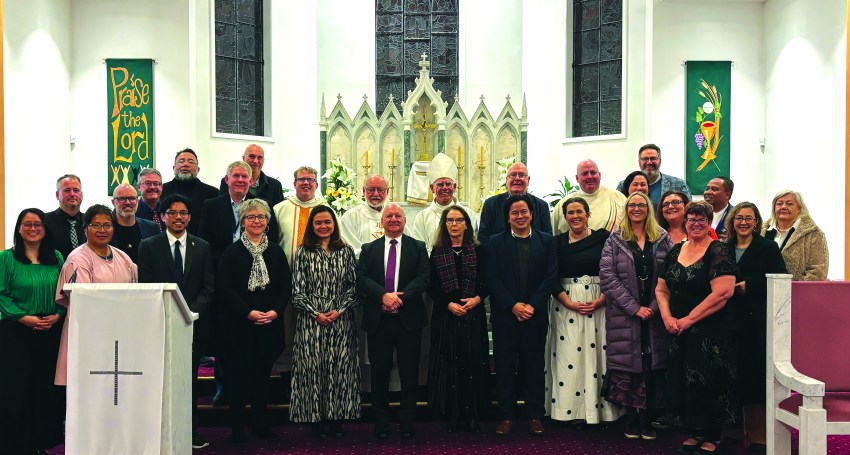
While it’s understandable that one becomes accustomed to having a certain role, what does it suggest about the people who are just in the assembly, not reading, giving communion, leading music, or serving?
Are they passive spectators? If that were true, the most participatory liturgy would have everybody in a ministry and nobody in the assembly! Surely that is not what the Church had in mind when she said “all the faithful should be led to that fully conscious, and active participation in liturgical celebrations which is demanded by the very nature of the liturgy.” (Constitution on the Sacred Liturgy, 14).
Do we understand the nature of the liturgy and what it demands? We often assume participation means having an assigned task. If we think about the liturgy as a dialogue, the role of the assembly is essential.
Consider the rhythm of the Mass; every response, acclamation, “Amen” is an answer to God’s call. The Preface Dialogue is a good example. Before the priest begins the Eucharistic Prayer, he first invites the assembly into the thanksgiving. Only after the people respond, “It is right and just,” does he proceed.
The dialogue reminds us that the Eucharistic Prayer is not something the priest does alone. It is the prayer of the whole Church. Imagine if the priest began the dialogue and nobody answered? The preface to the Eucharistic Prayer could not proceed because the dialogue would be incomplete.
We often assume that participation requires us to be seen or heard. Yet the primary participation asked of every baptised person is to be present as part of the Body of Christ. I still remember when as a young adult in grief after my father’s passing, I was unable to voice the responses at Mass, let alone sing hymns of praise. I showed up but relied on the assembly to be my voice.
The ministry of the assembly can be easy to underestimate because there is no roster or stage time. Far from being a passive audience, the assembly is a body that listens, responds, sings, prays for the Church and the world, brings the joys and sorrows of life to the altar, and supports and carries one another. Holy Week came during this time of grief. Normally I would be on the schedule for reading, singing, or working in the sacristy, so I was acutely aware of the assembly’s ministry to me at that time.
Ultimately, none of the other liturgical ministries work without the assembly. Priests convene the Church and preside over the prayer of the assembly. Readers proclaim the Word so that the people may hear and respond. Cantors intone so that the assembly can sing.
At Communion, a sacred dialogue unfolds between the faith statement, “The Body of Christ,” and the response “Amen.” Every liturgical ministry exists to support the participation of the assembly gathered.
If you find yourself wishing you were more involved in the liturgy, the answer may not be finding another role. It may be discovering the importance of the role you already have. Your place in the assembly matters; the Body of Christ needs your voice, your prayer, and your presence.