Wallaroo’s shining aged care stars
Local
Wallaroo’s Star of the Sea aged care community may provide residential aged care including dementia, respite and palliative care services but for staff, it’s more than a job. It’s their purpose, writes Katie Spain

For nearly half a century, the heartbeat of Star of the Sea wasn’t in the chapel or the front office. It was in the kitchen. That’s where Joan McCall spent 48 years of her life, quietly nourishing generations of residents, staff and sisters at the Catholic aged care home in Wallaroo, part of the Diocese of Port Pirie.
Joan didn’t set out to build a vocation there. As a young school leaver, she simply needed a job.
“I like the job. That’s what kept me there.”
What began as a local teenager looking for work after Year 11 became a lifetime of service.
Joan had finished school early, having taken a commercial course that didn’t lead to matriculation, so she started looking for jobs close to home.
Star of the Sea happened to be hiring. She walked in as a kitchen hand and left 48 years later.
“People would ask, ‘Have you been here long?’ and I’d say, ‘I am part of the furniture.”
In the early days, Star of the Sea was a modest 20-bed low care facility, run by the Sisters of the Little Company of Mary. The kitchen, Joan remembers, was equally modest; functional, but a long way from the fully equipped commercial space it would become.
“Originally, the Sisters had organised that they could get meals on wheels. We went up to the hospital and collected them in containers and brought them back to Star of the Sea and served out the main meal at lunchtime,” Joan says.
“They did breakfast there, and we did tea there, but not the main meal.”
That arrangement lasted only a few years before the decision was made to invest in a new kitchen.
“From then on we started actually doing all meals.”
From that point, the kitchen truly became the centre of daily life. As the home grew from 20 to 70 beds, the rhythm of Joan’s days was tied to mealtimes, dietary needs and the small but vital comforts that good food can bring in old age.
“We like to think that we kept them well fed.”
Among the many meals, two recipes became tradition: a Christmas pudding and a Christmas cake that stitched together the faith, history and family of the place.
“The Christmas pudding was Sister Carmelita’s family recipe,” Joan explains. Sister Carmelita, a nun who was originally in charge of the kitchen, brought her own family’s pudding to the home.
“And the Christmas cake was my great-grandmother’s recipe.” For years, making the Christmas pudding was a communal ritual.
The big bowl of cake mixture was taken to each resident’s room, so each could take a turn to stir.
Food, for Joan, was always more than fuel. It was her way of showing love to people she knew only briefly, and to some she knew all her life.
“When I first started, there were people there that were like grandparents and great-grandparents to people my own age,” she says. “In fact, my own great aunt and my own grandmother were there for a while.”
That is the nature of country life and of a Catholic aged care home woven into the fabric of a small town.
Staff often grew up alongside the families they now serve. Joan retired a few months ago and the separation still feels fresh. She left because love was needed even more at home.
Her husband is living with dementia, and caring for him is part of her next chapter.
“I had very good friends,” there. “Very good friends.”
Joan’s voice cracks with emotion. You don’t spend more than four decades in one workplace without leaving a piece of your heart behind.
The hard work at Star of the Sea continues and Joan continues getting updates.
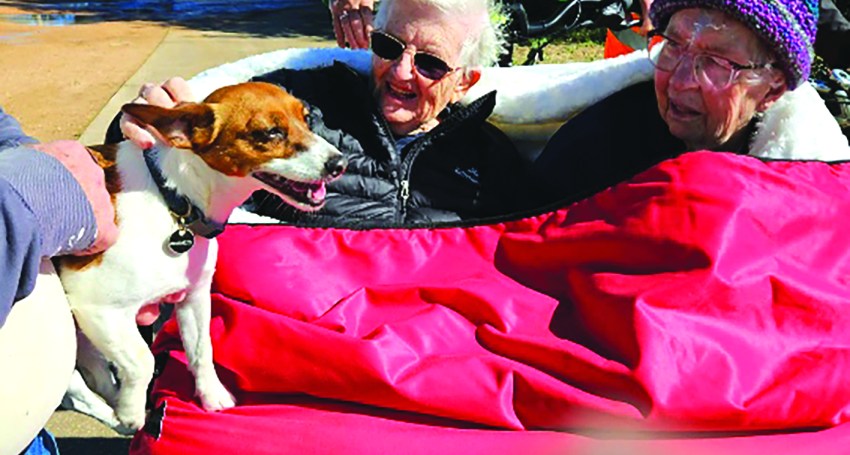
Her former colleague Gaylia Johns delights in telling her about the trishaw they use to cycle residents around town. “It’s the best thing since sliced bread,” Gaylia says.
The addition on a new palliative care team has resulted in a memory tree that lists the name, date of birth and date of death of past residents going back to 2020.
“It is stunning and an acknowledgement of those that have called Star of the Sea home,” Gaylia says. It is also a way to remind the families of their loved one and how much they meant to Star of the Sea staff long after they stop visiting.
“We present the families with a beautiful book with highlights of their loved ones’ younger days and their time at Star of the Sea and some personal messages from staff.”