The rhythm of life
News
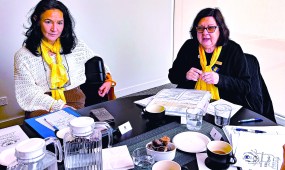
“I honestly don’t remember when I started going to church because I grew up in it,” Joel Hakizimana explains in a cafeteria at the Royal Adelaide Hospital where he visits as a social worker. “Church was simply part of life.”
Hakizimana was born in Burundi, a small nation in central Africa that sits on the eastern bank of Lake Tanganyika. Once a colonial possession of the German Empire and then Belgium after the German defeat in WWI, Burundi gained independence in the 1960s. As with many postcolonial nations, power struggles led to civil conflicts, erupting into civil wars in 1972 and then in 1993. It was the troubled aftermath of that second conflict into which Hakizimana came into the world, and would provide the impetus for his journey to Australia.
His memories are focused more on closeness, faith and community though. “On Sundays everyone stopped what they were doing and went to church,” he says. “Unless someone worked in an essential service, people generally didn’t work on Sundays.”
“Many people travelled long distances to attend Mass. For me it was about an hour-and-a-half walk each way. Families are very close and communities are very connected. Neighbours help one another. If someone needs food, support or assistance, people share what they have. That sense of community is very strong.”
That sense of community is something Hakizimana saw the churchgoers who established the African Mass community in Adelaide as striving to maintain in their new home.
Though the African Mass draws on people who have come to Australia from a very diverse range of African nations, and encompasses many different languages, there is unity in faith.
“One thing we discovered was that many people arriving from Africa had been told there was no Catholic Church in Australia,” Hakizimana says.
“Once we realised that, we started spreading the word through our communities. The African Mass includes people from many countries, including Burundi, Congo, Sudan and South Sudan. Today it is even broader than that. People from many backgrounds come to participate.”
Hakizimana, who is an altar server for the African Mass at St Francis Xavier’s Cathedral, goes on to say that “at the African Mass, the priest may use different languages during the homily.
The songs are sung in multiple languages and also in English, so everyone can participate. People are also able to speak with community members who share their language and cultural background. That’s very important. Sometimes people need guidance, support or clarification about Church teachings, and it helps when they can speak with somebody who understands both their language and culture.”
As such, “the Church played a huge role in helping us settle here,” says Hakizimana. “Recently we attended an event where members of the African community were recognised for contributing to Australian society. Hearing that was very meaningful.”
“We always try to give back to Australia,” he says, “because Australia welcomed us. Without the support we received from the Catholic Church when we arrived, many of us would have struggled.
“The Church gave us a foundation. We built on that foundation using the skills, values and strengths we brought with us.”
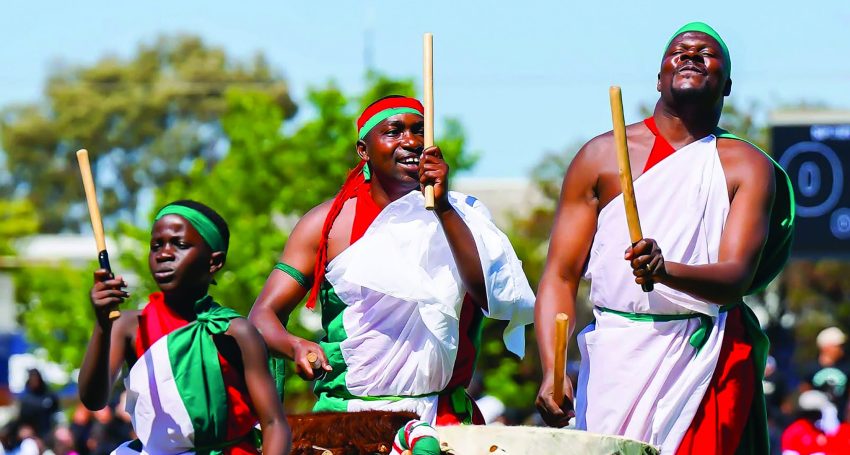
Another source of connection and strength for Hakizimana has been Adelaide’s Burundian Drummer’s Club. “Drumming is a very important part of Burundian culture and history,” he says. “Traditionally, drums were played during major events involving kings, government officials and important ceremonies. Historically they were associated with the royal court.
“The drumming traditions are still highly respected today. When I visited one of the historic drum sites in Burundi, I was able to see drums that were decades old and learn more about their significance.”
Drumming also provides inter-generational connections. “When we came to Australia, we wanted to preserve this part of our culture. We started from scratch and taught younger generations how to play.
“The drumming is not just about music,” Hakizimana explains. “It teaches language, history and culture. Many young people born in Australia have never seen these traditions in Burundi, so this helps connect them to their heritage.”
It’s also an intense, physically demanding discipline. “It’s very physical,” Hakizimana says. “The drums are large and powerful, and we don’t need microphones because everyone can hear them. You’re playing, singing and moving at the same time. Many performances last around half an hour, but after 15 minutes you’re already feeling tired. You need a lot of energy and fitness.”
While drumming helps provide a connection to the Burundian community and the past, Hakizimana also sees it as a source of connection to the wider Australian community in the present.
“We’ve played at church celebrations, weddings, birthdays, cultural festivals, Australia Day events and major community gatherings. We performed during the ordination celebrations of Fr Eric, and we’ve participated in events attended by government leaders and community organisations.”
It’s this sense of connection that drives Hakizimana to keep seeking a bright future for the communities that have given him so much in Adelaide.
“Many people have lived through difficult experiences before coming to Australia,” he says.
“Those experiences don’t simply disappear. They stay with people, and communities need ongoing support. If we continue working together, supporting one another and involving people from different cultures and backgrounds, there will be better outcomes.
“What I have, plus what you have, when we put them together, works better than working alone.”