Communion: Finding My Way Back to Faith – A REVIEW
Editorial
It is somewhat astonishing to discover from this autobiography that JD Vance, the vice president of the United State of America, and arguably the second most powerful man in the world, has been a politician for just three and a half years

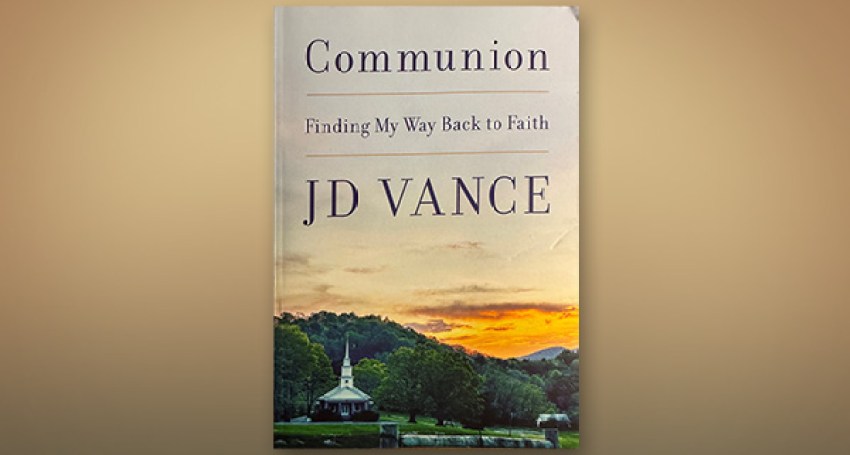
The other, more immediate surprise given his day job, is that he had time to write this book. Communion: Finding My Way Back to Faith it transpires, was begun five or six years ago and indeed the last 50 pages or so are little more than updates to make it current. There are the deaths of his father and that of the assassinated Charlie Kirk, JD’s best friend in politics he tells us.
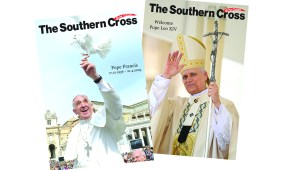
JD was too, in Rome last year when Robert Prevost became Pope Leo XIV, but these snippets add little to what is mostly a self-help manual for the lost souls of middle America albeit and at times, an engaging if not overly thought provoking read.
For context, JD grew up in poverty in a drug addled corner of Ohio. His debut tome, the 2016 Hillbilly Elegy, depicted the struggles of a dysfunctional family and how, somehow, JD found a way out, first to the US Marines and later, Yale Law School. It is a remarkable battling of circumstance for which he deserves immense credit.
Communion begins with his childhood and time spent in various Baptist and Methodist churches. The brief section on America’s non-denominational churches is fascinating, with congregations effectively in thrall to the whims of individual pastors who invariably make up their religion as they go along.
The young JD was a believer he tells us: he read the Bible all the way through twice as a child, before becoming disaffected with the church and pretty much everything to do with his life. His father – a charismatic pastor – was often off the scene, his mother was a chronic drug addict (astonishingly she is now 11 years clean) and he lived with his grandmother, an uneducated and no-nonsense woman but who was probably the making of him.
Communion, for anyone who doesn’t know this about JD Vance, is so titled because seven years ago he converted to Catholicism in his search for something of more substance than his childhood forays into religion which led him to becoming an atheist from his mid-teens.
His shift to Catholicism feels genuine though he comes across more as a (strong) Christian first and foremost. He is a politician, we should remember, and making himself as approachable to as many people as possible is eminently sensible, if predictable. Very much in keeping with the everyman approach however, we don’t really know – at least from this book – what he stands for.
He plays around the edges of abortion (he is pro-life but he doesn’t make an out and out plea in this respect) but is more forthright on immigration where he professes not to be a much of fan of anything beyond the small scale. Falling birth levels in western countries worry him immensely.
It is difficult to feel this book is anything other than a pitch for the presidency which will change hands in 2029 and, in this respect, JD has timed his run well. Had he lived in a time of more heavyweight politicians (and this is not restricted to America only), then Communion would likely have been too flighty to make it to the printing press.
The book comes across throughout as the utterings and meanderings of a modern day Holden Caulfield, the anti-hero of JD Salinger’s 1950s epic Catcher in the Rye. Vance is no intellectual or a man hewn from great industrial or military heft and his outlook – religious and political – forever feels stuck in Year 10, as per Caulfield. It really is that basic and introspective.
There will be far worse politicians than Vance out there and he comes across as a decent if, sadly, colourless man. He is certainly no theologian and while overcoming his upbringing made him what he is, he feels damaged by it and, really who wouldn’t be?
One positive stands out however. JD tells a good tale and clearly knows who to tap into. He is no Mark Twain or Charles Dickens but is a reliable chronicler of an underbelly of America that is probably a reflection of contemporary America more widely. He is in tune with his countryfolk and that makes him a credible contender as the next president of the United States.
That he converted to Catholicism seven years ago is, on the face of it, intriguing but Communion offers little of substance in this respect.
I wondered before I read Communion – and you can do it in a weekend easily – whether the other, and more famous, American Catholic had read it too.
Having ploughed through it myself, I imagine Pope Leo has more fulfilling books to occupy his time. But for those with the inclination and time on their hands, Communion is an insight into an America still searching for itself. I’m happy I read it but won’t go back again.