Academic, pastor, priest and contrarian
People
Retirement for many people can mean days of idling and enjoying a slower pace of life. Fr Michael Trainor, who stepped down from his role as the Lockley’s parish priest this month, is not one of them he told Richard Evans.
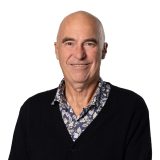
When someone has 52 years experience as a priest to their name and has authored more books than he claims to remember, an immediate and deep credibility comes to hand.
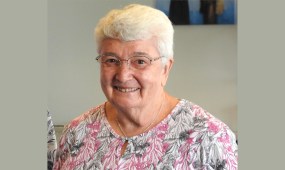
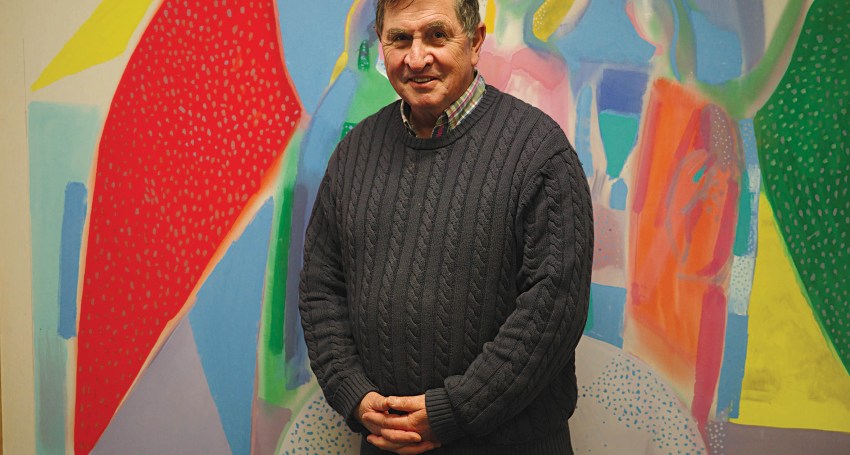
Seven years ago when The Southern Cross spoke to Fr Michael Trainor (pictured), the focus was on his regular – and highly impressive – Monday gliding expeditions at Gawler Aerodrome, an extracurricular activity that is still ongoing for the 75-year-old Lockley’s parish priest and university academic.
Sitting down for a chat with no specific direction in mind is, however, arguably even more engaging.
As you might expect from a man with a PhD in theology (from Boston College, USA) and who intends to carry on teaching adult education and biblical studies at the Australian Catholic University (ACU) for some time yet, Fr Michael thinks an awful lot. And therein lies a large clue to his outlook and output.
Along the side wall of his ACU office in Thebarton are several shelves laden with hundreds of books. None look untouched and indeed most look well thumbed, academia all consuming. As much as he’d like to, Fr Michael simply doesn’t have the time for reading outside his allotted theological specialities.
His retirement as a parish priest in early August will only fuel and expedite his learning and teaching. As much as he has accomplished – and it is a significant cache – there is the feeling that Fr Michael still has much to do.
First though, a background.
From South Australia, and an alumni of St Francis Xavier Seminary in Rostrevor, Fr Michael is the youngest of four children. His father, Laurence, contracted Addison’s disease when serving in Papua New Guinea in World War II which led to a parental role reversal with his mum Frances the family breadwinner (she became a teacher) and dad bringing up the family at home.
“So when I went to school, I was surprised to see that Dad was the only father in the mothers’ club,” Fr Michael said.
“It was that experience that really grounded me in looking at things from a different perspective. That shaped my theology and it shaped the way I perceived theology. When I was doing postgraduate work, and then doctoral work, there was a whole growth in feminist hermeneutics (the study of how we interpret human actions).
“It’s a liberationist style of hermeneutics that seeks to look at our tradition from another perspective, rather than more conventional, hierarchical, patriarchal, kind of theme which still exists today.”
It means, he said, that he is drawn to other, less conventional ways of understanding people and texts. A contrarian, of sorts.
“A major theme in my own work has been on what we call ecological hermeneutics. How does the suffering of our planet affect the way we hear the biblical text? This is quite a newly developed approach to understanding the Bible, which has actually come out of Adelaide.
“It’s called the Earth Bible project and there are a lot of scholars now working out of this ecological thing. How can our passion for the survival of the planet influence the way we hear the biblical text? And how can we teach about the text that grounds us in this approach?”
Quite simply, looking at things differently has shaped the way Fr Michael approaches life academically and otherwise (gliding was an antidote to a bad cycling accident and the need to do something vibrant and to live in the now).
“Sometimes that’s been very helpful. Sometimes it’s been annoying to others, and sometimes it’s brought me into conflict with some ecclesial authorities.”
Weaning himself off life as a parish priest will move the spotlight onto his research at ACU with safeguarding to the fore of his studies.
“What is absent is the theology underpinning safeguarding. Why do we do what we do as Christians, as Catholics? So, some of the work that I’ve been doing has been to look at the issue of sexual abuse. Is it an issue only within our age?”
(He authored a 2015 book relating to what he says was the sexual abuse of Jesus at his crucifixion that was well received, if perhaps uncomfortable reading.)
Such output begs the questions of whether Fr Michael thinks of himself now as an academic as much as a priest?
“I see myself as a pastoral educator. I think being grounded within the life of people, and the parish raises the key issues that we have to deal with in the Church. And this is probably where I’m a bit on the edge. We’ve so emphasised ordained ministry as the primary sacrament, even though theologically it’s not. The primary sacrament is a baptism.
“So what I’ve really been trying to do through ministry is to raise up the leadership of lay people and the baptised deletion. I always remind them that every time I celebrate the Eucharist, the first garment I put on is the baptismal garment, so it’s the gift of baptism that enables me to preside a liturgy through ordination. Ordination specifies the call to baptism. All of us are called through baptism to be priests and ministers through baptism.”
A theme Fr Michael explores with his students (online and with teachers in person in Thebarton) is a literalist understanding of the Bible.
“To be a Catholic, you cannot be a fundamentalist, which is confusing. When they hear that Jesus fed 5000, they take that as, well, Jesus fed 5000. But what I try and do is insert the story within the gospel writer’s world. I try to give some understanding of the background of the story.
“And then there is ‘what was the intention of the author’? How do you understand the story and what is the author on about? Once people, students get a sense of that, they begin to become adult learners, adult educated in the story of the gospels.”