Taking time to memorise
Opinion
How many phone numbers do you know? Except for a few long defunct landline numbers from my childhood, I know my mobile number. That’s it.


If I lost my phone, even if somebody else lent me theirs, I wouldn’t know any number to call. Memory and remembering are still important functions of human interaction but with the way information is at our fingertips today, I find that life doesn’t call for memorisation in the way it used to. Is it obsolete or is there still value in old-school memorisation?
Recently I made my annual spiritual retreat. In addition to prayer, my goal was to read some books and get acquainted with the breviary used here in Australia. The Australian breviary uses a different translation of the texts, some of which I had committed to memory after praying with the translation used in North America for years. I decided to select a couple new texts to memorise as part of my spiritual program. I do think memorisation is not only useful but also important for the spiritual life.
Where my office is situated, I hear the bells at St Francis Xavier’s Cathedral every day at noon. Inside the Cathedral, those assembled for the 12.10pm Mass pray the Angelus as soon as the bells ring. The Angelus prayer grew from a medieval practice of praying the Hail Mary three times in the evening. The practice evolved to follow the ringing of a bell and was combined with a meditation on the mystery of the incarnation. It then came to be prayed three times a day, at 6am, noon and 6pm.
The contemporary form of the prayer was established by the 16th century. A few times when I noticed the bell, I invited a colleague nearby to join me in praying the Angelus as it only takes a few moments. One was familiar with it and pleased to join. One remembered it from school and was keen to resurrect it from the recesses of his memory. A third colleague, always open to pray said ‘What’s the Angelus?’.Since developing the habit, this same colleague has remarked that the prayer has come up several times in day-to-day life. And over time, in praying, the answer to ‘What’s the Angelus?’ has evolved to have deepening significance. I don’t want to spoil it for you and I trust, that if you were to pray the Angelus regularly, you would discover its purpose for yourself.
As we approach the season of Lent, I’d like to invite you to explore these questions about memorisation for yourself as one of your Lenten disciplines. Consider committing something prayerful to memory and take note, over the season, of what effect it has on you and your spiritual life. I can recommend the Angelus for this exercise. This prayer lends itself to praying as a dialogue so if you have a colleague, family member or friend to join you, that might be fruitful and encouraging but you can certainly pray it solo. Maybe you already know the Angelus or some other text draws you. It’s your choice. Other texts I can recommend include the Gospel canticles (eg Benedictus, Magnificat, Nunc Dimittis), psalms, or, if you have a connection with another language, the Our Father or another Mass response in the other language. Some tips for memorisation include writing the texts out by hand, reciting aloud and especially singing as the melody acts as a memory aid.
Verse: The Angel of the Lord declared unto Mary,
Response: And she conceived of the Holy Spirit.
Hail Mary, full of grace, the Lord is with you;
blessed are you among women,
and blessed is the fruit of your womb, Jesus.
Holy Mary, Mother of God,
pray for us sinners
now and at the hour of our death.
Amen.
V: Behold the handmaid of the Lord,
R: Be it done unto me according to your Word.
Hail Mary…
V: And the Word was made flesh,
R: And dwelt among us.
Hail Mary…
V: Pray for us, O holy Mother of God,
R: That we may be made worthy of the promises of Christ.
Let us pray. Pour forth, we beseech you, O Lord, your grace into our hearts: that we, to whom the Incarnation of Christ your Son was made known by the message of an Angel, may by his Passion and Cross be brought to the glory of his Resurrection. Through the same Christ our Lord. Amen.
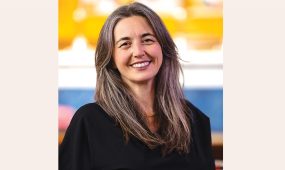
– Dr Simone Brosig is pastoral leader, Community, Life and Worship.