Education trailblazer who shared her many gifts
Obituaries
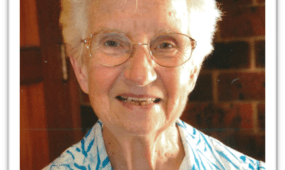
Sister Deirdre Jordan RSM: Born September 18 1926; Died January 10 2026

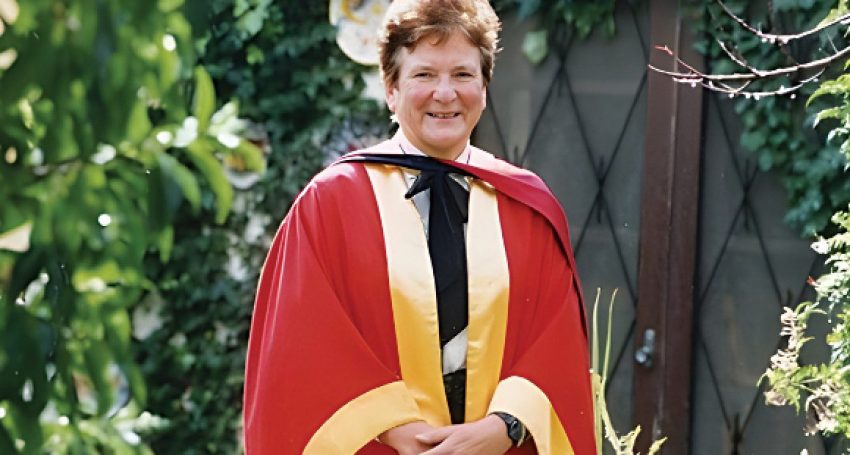
Sr Deirdre Jordan, the oldest member of the South Australian Sisters of Mercy, was born in Loxton, South Australia, to Clement and Helena (nee Roberts) Jordan.
At the age of 12 Deirdre moved to Adelaide to board at St Aloysius College. An outstanding student, she went on to become dux of the school and head prefect in 1943. She joined the Sisters of Mercy on February 2 1946 and was professed as Sr Mary Campion on October 6 1951.
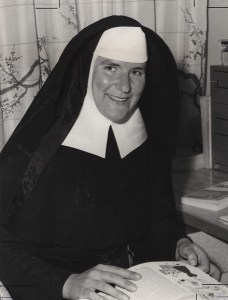
Sr Deirdre Jordan, Principal, St Aloysius College Archives
Deirdre was appointed principal of SAC in 1954 when she was only 27 years old and held this position for 14 years. During her principalship, heavy emphasis was placed on the education of members of staff, especially in the field of religious education. Teachers, both religious and lay, were given every opportunity to improve their qualifications and to become professional educators. Teaching nuns were given sabbaticals that allowed them the time in which to further their studies, sometimes in universities overseas.
Deirdre was a strong and influential lobbyist among the independent principals in South Australia and was critical to the subsequent changes made to the funding of independent and Catholic schools.
Under Deirdre’s leadership, St Aloysius became a progressive school, and one that valued the independence of its students. In 1969 she was made a Member of the Order of the British Empire for services to education.
While at St Aloysius, she completed a masterʼs degree in education at the University of Adelaide, becoming the first woman to do so. This led to a position as a lecturer at the University of Adelaide in sociology, where she remained until 1988. During this period she undertook a number of study tours including to Tanzania, China and South America.
Following her resignation from St Aloysius in 1968 she moved into tertiary education with great success.
After seven years as pro-chancellor at Flinders University, she was appointed chancellor in 1988 and on her retirement
in 2002 was granted the title of emeritus chancellor. Deirdre remains Flinders University’s longest-serving chancellor and is recognised as one of the most influential figures in the university’s history, playing a vital role in shaping Flinders University’s early direction while championing access to education.
Speaking after her death, Flinders University Vice-Chancellor Professor Colin Stirling described her as a “remarkable leader whose vision and dedication helped shape Flinders into the institution it is today”.
“Her tenure as chancellor was marked by integrity, pragmatism and a deep commitment to community service,” he said.
“She previously spoke of being a custodian, rather than an owner, of a profound period in Flinders’ history and I thank her for the guiding influence that we honour in Flinders’ 60th anniversary year.
“Her legacy lives on through the foundations she helped to establish in Flinders’ early days, as well as our student accommodation village that bears her name.”
In 1989 Deirdre became the first woman in South Australia to receive Companion, General Division, Order of Australia, in recognition of her service to learning and to the community, especially to the Aboriginal community.
In an interview with The Southern Cross in 2019 Deirdre remembered the moment she decided on a religious vocation.
“I was cleaning my teeth at one of those long basins in the dormitory and I suddenly had this absolute conviction that this is what I had to do,” she recalled. “I stuck to it and didn’t ever change.”
Deirdre said the key motivation for her then and throughout her vocation was “commitment, commitment, commitment…to serve the needs of others in whatever capacity I could”.
“I’m a great believer that everyone has a different talent…and so the commitment to serving others as a group, in all different ways, has evolved since I started,” she said.
When Deirdre was appointed chair of a government committee looking at heritage listing Lake Eyre, Deirdre said she was chosen by the Greens, the pastoralists, the heritage officers and politicians because “they couldn’t find anyone else that the whole committee would agree to”.
While she refused to describe herself as a feminist, Deirdre furthered the cause of women both as a role model and by encouraging them in their academic endeavours.
To this end, the Mercy Sisters were influential in that “every little bit of talent you had in you was squeezed up to the surface and people met their responsibilities”.
With her housemate Sr Judith Redden, also a former principal of SAC, Deirdre visited Argentina several times.
With the generous support of Deirdre’s younger brother Tony and his wife Kerrie, the Sisters helped expand a women’s shelter and build a community centre which was opened in 2009 by the Australian Ambassador to Argentina.
Deirdre left strict instructions not to have a eulogy at her funeral Mass. Instead, seven symbols encompassing elements of her life and highlighting the great diversity of her influence and interests, were brought forward: Religious, family, reading/study, travel/global connections, garden/art, camping/celebrating and academic/honours.
Deirdre’s motto, chosen nearly 80 years ago, was ‘abide in me and I in you’.
Fr Maurice Shinnick, in his homily, said those words were the driving force for Deirdre’s life of mercy: “a union with Jesus which enabled her to give of herself to so many people and in so many works, and with such openness and kindness.”