Called: Reaching places not always accessible to priests
Vocations
In our series on different vocations within the Archdiocese, Tim Grauel tells RICHARD EVANS what differentiates a deacon from other clergy.
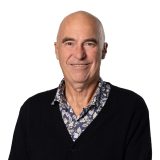
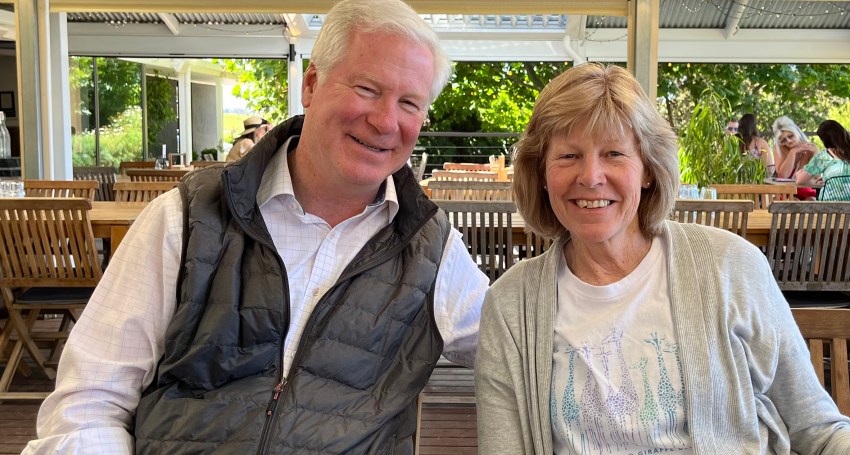
‘Do you think the average person who attends Mass has much idea what a deacon does?’
That’s the question put to Deacon Tim Grauel, a husband and father of two who has committed to serving the Church.
The 67 year old is emphatic in his response.
“No, no, no. People in each of the parishes where I’ve served have not understood why the church has deacons,” he said.
“But they were welcoming and they learned. Theyʼre like, ‘so you can celebrate a baptism. Oh, and you celebrate wedding services, funeral services and give homilies’.
“As a pastoral director over the past two years, I offered leadership to a couple of parishes and did what most parish priests do.
“There are exceptions of course; a priest is needed to hear confessions, to preside at Mass and anoint the sick. My responsibility was to ensure there was a priest available for all sacramental needs.”
The Church has, for more than 1000 years, been wrestling with the clerical office of deacon, Tim said. In the early church, deacons were highly influential when it came to administration and money.
When asked what a deacon does, he has a simple response.
“I say ‘tell me what a Christian does?’. Itʼs without borders, it’s just everything. The whole point of being a Christian is that the gospel, the fire of Godʼs love, can reach every capillary of our world. All the crevices, nothing off-limits, everything.
“And the role of the clergy is to facilitate and to encourage and nurture the vocation of the baptised. The diaconate is a bit like a bridge. A cleric, but also involved in the secular world through marriage, employment, where they live and what preoccupies them. Itʼs not like celibate priests who typically have a special place in which to live and a defined parish.”
A deacon is not assigned to a parish (technically heʼs assigned to the bishop and the diocese), Tim said, which meant he could be relocated anywhere.
In Tim’s case this has been Hallett Cove, Brighton, Lefevre Peninsula and Glenelg. Currently he has a dual role, in the parish and as diaconal assistant to the Archbishop’s Office.
There are currently 14 deacons operating within the Adelaide Archdiocese.
Tim’s background is less conventional than most.
Almost 50 years ago, as an 18-year-old, he journeyed from the east coast of America to the west, leaving his home in Pennsylvania to take up a tennis scholarship at university in Los Angeles.
“The university had nothing to do with the Catholic Church, I wasnʼt Catholic. They decided to promote the university and they said, ‘Why donʼt you go to Australasia and stay with alumni and promote the university and we’ll give you a small stipend’,” he said.
“It wasnʼt much but as a student it was fantastic. I didnʼt know anything about Australia. When I flew in, I didnʼt know whether I was going to Perth or Sydney.”
His time spent in various parts of Australia and Asia was transformative.
Serendipitously, upon his return to Los Angeles, he met his future wife Carrie, an Aussie from Melbourne.
An attendee of the Worldwide Church of God for 12 years, the (by now married) Tim and Carrie settled first in Adelaide before Tim became a pastor in far north Queensland and later Brisbane.
He was ordained in the Uniting Church and again served parishes as a pastor, before pausing to help Carrie cope with a cancer diagnosis.
Meanwhile an interest in Catholicism grew to the point where Tim felt drawn to be received into the Catholic Church. This coincided with Tim and his family moving back to Adelaide in 2004.
He worked in various roles for ACH Group, a not-for-profit aged care provider, where his soft skills with people proved particularly valuable.
Archbishop Philip Wilson encouraged him to consider the diaconate.
“I declined initially because I didnʼt understand it,” Tim said. But after a few years of discernment he agreed to continue the conversation.
“I realised that the whole point of the clergy was to support the vocation of the lay faithful,” he said.
One of his roles in recent times has been to visit every Catholic school in the Archdiocese. He was also been a co-lead on the document ‘Being Church Together’
“My contribution was more with the theology and the context, to see in a fresh way how beautiful the ministry of Catholic education is with families, young people and teachers and staff. Itʼs a bright, shining, good news story that isnʼt fully appreciated.”
Tim said the diaconate enabled the bishop and the Church to reach into places not easily accessible by parish priests.
“The deacon, embedded into workplaces, into family and community life is not separated in a rarefied kind of way,” he said.
The importance of the role is highlighted and celebrated each year on August 10, the feast day of
St Lawrence, a deacon and martyr of the early Roman Church.
Footnote: A Catholic deacon is defined as an ordained minister – who can be single or married – and who serves the Church through a ministry of liturgy, word and charity.