Pioneer of pastoral care for women
People
The life of a consecrated woman has changed dramatically since Ruth Egar rsm was professed in 1955. The Mercy Sister spoke with JENNY BRINKWORTH about her vocation, including her pioneering pastoral work in the wake of Vatican II.
Ruth Egar remembers seeing the front page of The Advocate, Melbourne’s Catholic newspaper, quoting Pope John XXIII as he opened the Second Vatican Council and urged the Church to ‘open its windows and let in the light’.
“It was 1962 and I was walking up the marble staircase of the Mercy Hospital when I saw The Advocate headline,” Ruth said.
“My heart lifted with joy. I knew it wasn’t just me…the Church needed great change. Perhaps I didn’t realise then that it was women, most of all, who were ‘missing in action’ in our Church.”
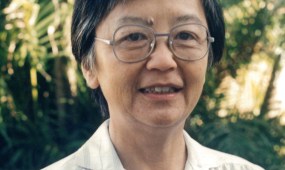
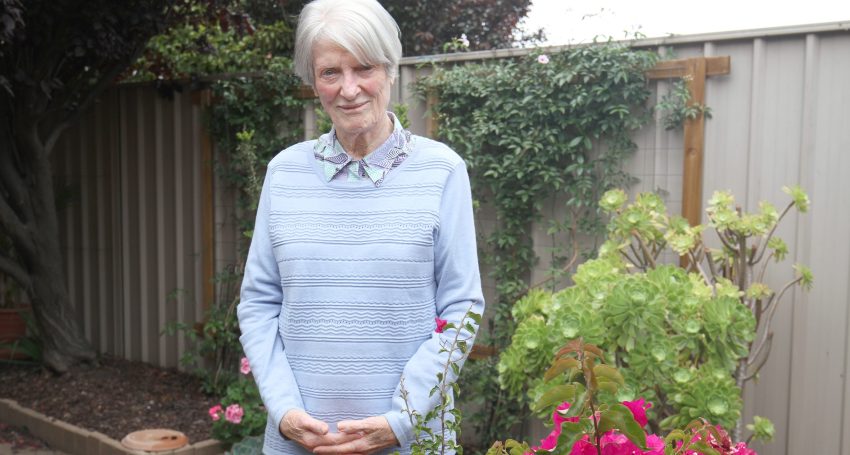
The youngest daughter and eighth of nine children to Dorothea and Eugene Egar of Parkside, Ruth (pictured) had a childhood full of love and laughter. She and her two brothers – the late Fr Rob and Passionist priest Fr Tony – were the ‘young ones’ in the family and there were gatherings around the piano with cousins, aunts and uncles every Sunday night.
Her parents’ strong faith left its mark not only on Rob and Tony but also Ruth who decided to join the Mercy Sisters after a year of nursing.
Educated by the Mercy Sisters at St Raphael’s until Grade 3, and at St Aloysius College (SAC) to Year 11, Ruth felt the “tug” of a religious vocation while at Calvary Hospital and entered the novitiate at Angas Street before turning 19.
“It was like going into the unknown but an unknown that appealed to me,” she recalled.
“I attribute some of this to the family experience of living ‘next door’ to the Passionist Monastery. The liturgies, particularly of Lent and Easter, were responsible for a growing awareness of the presence of a great God – who wished to be known.”
While the novitiate wasn’t a “picnic in the park”, Ruth said there were many moments that were part of the growing desire to learn more of the gospels and a theology that made sense to her and would form part of her future ministry.
At the age of 21 Ruth joined six other young women making their first profession in St Francis Xavier’s Cathedral, in the presence of Archbishop Matthew Beovich.
“We were dressed as brides; it was all very dramatic and was such that parents and siblings were left under no illusion that this was to be an ascetic life – one in which they played little part,” Ruth said, adding it was very different now.
“Religious women today share a community life; one that brings hope and life and can be shared with so many women and men in our ministries.”
She credits Vatican II for “encouraging the growth and understanding in the way apostolic religious life is lived”.
Ruth completed teacher training with the Dominican Sisters and taught for several years and was then invited in 1962 to return to nursing studies at the Mercy Hospital in Melbourne. After three “wonderful” years she came fourth in the state as a registered nurse.
At 30 she returned to Adelaide to operate a new aged care nursing facility for elderly Sisters which was funded by the Federal Government. Ruth did this for five years, while also teaching physiology and religion at SAC.
Her journey changed direction when she was invited by Fr Bob Wilkinson, then chaplain of SAC, to mentor secondary students as part of the growing Young Christian Students and Young Christian Workers movement (YCS and YCW).
The YCS and YCW experience was formative and she became a member of one of the first Christian Life Movement groups established by David Shinnick in St Mary’s parish. David and Brian Moylan were appointed as executives in the Diocesan lay leadership.
“I had this great introduction to the lay movement” she said.
“It grounded me, to hear young marrieds with families reviewing their lives in the light of the gospel. It opened my heart, my mind, my whole life to the daily life challenges of most families and their commitment to the gospel.”
But the biggest turning point in her ministry came in 1972. Fr Terry Holland, from Catholic Social Welfare (now Centacare), spoke to Ruth of the need for women to minister to the needs of women. He was particularly aware of those in outlying suburbs being pastorally neglected.
After seeking responses from some senior parish priests to having women working alongside them in parishes, and after approval from her order and Archbishop James Gleeson, in 1972 Ruth became a pastoral associate in Morphett Vale where brother Rob was parish priest.
To introduce Ruth to the parish, Fr Rob gave her a long list of families who were actively engaged and who supported the parish in different ways, such as on the Parish Pastoral Council or helping in the many different areas of Church life. After visiting these families, she was given a much longer list of those who were Catholic but who were not known by the parish.
In the second year Sr Meredith Evans joined Ruth and they lived in a house in Reynella. Meredith was formed through YCW before joining the Sisters of Mercy. She became invaluable in the work undertaken with the huge numbers of youth in the parish.
“I visited all of these families and heard the stories of family and working lives,” Ruth said.
“I was impressed by the goodness and love of parents with children – with their challenges and their great gifts.
As those who were participating in parish life shared their stories, the reality of a Catholic community became more solid, more real.”
By the time Ruth left the parish there were 24 groups of women meeting during the day, and several married couples at night as part of new Christian Life Movement groups.
A leadership team headed by Margaret van der Linden pioneered an ecumenical Home Help Group program set up for families in need. Teams of volunteers would drive women to the doctor or hospital, mind children for a few hours, cook meals for a family and do housework when a crisis occurred.
Ruth was also involved in assisting low-income families accommodated in transportable homes erected by the Housing Trust. Ruth and a few other leaders from Morphet Vale supported the initiation of the first Residents’ Association to liaise with the Housing Trust, resulting in Ruth receiving an award from the Christies Beach Council.
“It all came from the philosophy of Cardinal Cardijn – empowering people to take charge of their own lives,” she said.
In 1978 the Federal Government offered funding for Neighbourhood Development. The Salisbury Council sought funding for 1000 families in the area of Salisbury North and Direk. Ruth was appointed coordinator and with a team of three women, began knocking on doors and listening to the stories of the women.
After three years with the Council’s Community Development Department, Ruth felt the need to work within the Church environment.
David Shinnick invited her to join him on the Diocesan Renewal program. This involved interviewing about 40 priests on their response to the Renewal program.
Archbishop Faulkner sent Ruth to a Sydney workshop for Basic Ecclesial Communities, given by the Fr Jose Marins Team from Brazil. Fr Marins was greatly impressed by the Adelaide Diocesan vision statement on small Christian communities.
When Archbishop Faulkner presented with the approach of the Marins Team, invited them to Adelaide as part of the Diocesan Renewal in the early 1990s. The Basic Ecclesial Communities (BECs) were established. Supported by several priests and parishes, they were a way of meeting and involving many who otherwise were unknown to parish life.
Ruth’s health was compromised by several illnesses and she retired from the Diocesan BECs and provided support within parishes while also also helping to take care of some of her older siblings.
At the age of 70 she was appointed Vicar for Religious by Archbishop Philip Wilson. For the next seven years she worked predominantly with religious communities, especially the smaller groups.
“Getting to know and love these smaller communities, often coming from other countries and hence scarcely known here was a precious addition to my life and work in the Archdiocese,” she said.
Throughout her 70 years as a Mercy Sister, Ruth was given opportunities abroad such as four months with the Centre for Social Concern run by the Jesuits in Washington DC, sabbaticals in her favourite cities of Dublin and Rome and six weeks in Islamabad supporting Pakistani novices.
She also valued the annual retreats the Sisters were encouraged to make.
“These are times of silence and prayer,” she said.
“They often provide the kind of boost to our spirits if our apostolic lives seem to have lost some of the ardour of our profession and the road seems long.”
Her most memorable and dangerous overseas adventure was in 1974 when the Congregational leader Sr Monica Marks asked her to travel to Vietnam to visit their two Sisters and other Adelaide women working in Rosemary Taylor’s orphanages in Saigon. This was in the final few months of the war.
Sr Monica told Ruth the Sisters needed a ‘morale boost’. Ruth walked into the closing months of Saigon as it was falling to the Communists.
“My mother had died by then, but I knew I gave my father and the family a few anxious days during the nightly bombing of Saigon,” she recalled.
While it was a worrying time for those on night duty in the hospitals set up by Rosemary, she said the fear of attacks was banished the moment they were with the orphaned babies.
Reflecting on her vocation, Sr Ruth said she has had “the most fulfilling life and been opened to so many lives in so many settings”.
“In the process I’ve been opened to the love of a God who has room for all, no matter whom, and no matter what our circumstances. God’s love encompasses us and the whole of the Cosmos. We are all One.”