Focus on fertility for the faithful
News
A new initiative of the Adelaide Archdiocese and Fertility Fundamentals Inc has given Catholics in South Australia increased access to information about fertility services that are aligned to their faith.
A brochure called Fertility Services for Catholics has been produced for parishes and made available online through the Archdiocesan website for couples interested in finding out more about natural fertility methods for either avoiding pregnancy, monitoring their reproductive health or enhancing their chances of starting a family.
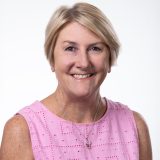
With the rise in infertility and growth in assisted reproductive technology services such as IVF, Fertility Awareness Methods (FAMs) and Restorative Reproductive Medicine (RRM) offer an alternative for not just Catholics but all couples, according to Dr Cathy Peterson who practices RRM in both Belair and Norwood.
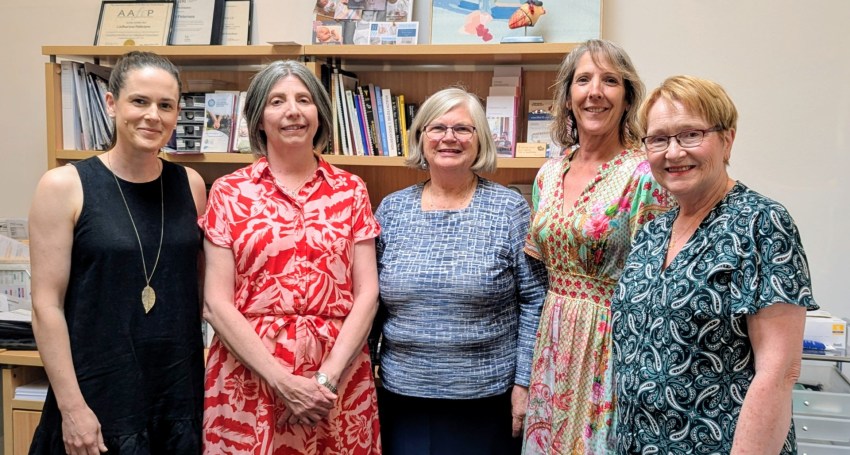
Dr Peterson and fellow Catholic GP Dr Toni Turnbull teamed up with obstetrician Associate Professor Dr Elvis Sěman and four FAM educators to establish Fertility Fundamentals Inc in 2014.
The educators specialise in three methods of charting fertility: Creighton Model Fertility CareTM, Billings Ovulation Method© and Sympto-Thermal Methods. Where underlying health issues are identified in that process, referrals can be made to Dr Peterson and Dr Turnbull who specialise in RRM.
Dr Peterson said there was an “impressive pregnancy rate” just from charting alone for couples with infertility.
“For example, research has found a 20-40 per cent pregnancy rate over 6-12 months among infertile couples once they started charting with Creighton, or 53 per cent over 24 months charting Billings.
“They had done nothing else to modify their underlying issues so recognising accurately with the help of professionals when is your most fertile time is really important. There is a lot more information and help provided than just using an app alone.”
Dr Peterson said the three charting methods all involved looking at cervical mucus which is the most accurate sign of ovulation but they differed slightly, mainly in the way the information is recorded.
And where RRM – the medical arm of natural fertility – is required to address underlying health issues, the pregnancy statistics for couples with infertility are equally promising.
She said while it may take longer, the success rate ranged from 52 to 66 per cent over 24 months for RRM compared to 25 to 32 per cent per cycle for IVF, according to Australian data. Furthermore, there was a 77 per cent lower cost per live birth using RRM. For couples who didn’t conceive using IVF, the success rate using RRM was still 32 per cent.
“That’s from internationally published studies, so it makes sense in so many ways, you don’t just have to be Catholic to be going down this path,” Dr Peterson said.
While the FAMs mainly began as a means of avoiding pregnancy naturally, with the increase rates of infertility, the most common reason for charting now was to assist with having children.
The FAMs involve three to six sessions, most of which are done online. The educators are trained in identifying “abnormals” in the chart patterns and in this case will refer the client to a doctor if indicated.
Dr Peterson said there were a lot of factors contributing to increased infertility.
“Women are leaving it late to conceive, they have been contracepting their whole repro-ductive years…they don’t know their cycles and have probably had underlying issues all that time,” she said.
“The pill was previously the ‘answer’ to everything in reproductive ill health in mainstream medicine, rather than looking for and treating underlying issues which caused problems such as cycle and bleeding irregularities. These same problems then can present later as infertility when the women stop the pill.
“And then there are other issues like obesity and insulin resistance which turns people’s normal ovulatory cycles off.”
Referring to the State Government’s recent announcement about increased funding for IVF, Dr Peterson said if the money was put into preventative health and education about fertility awareness methods, it would have “far greater effect than discounting IVF”.
“It’s not just about the ethics of the procreative aspect which is the Catholic side of things,” she said.
“If you stack them up alongside each other, it’s healthier for the mother in a pregnancy to have had a natural conception than IVF and healthier for the baby in terms of developmental issues, less pre-term births and low birth weight babies.”
She said only a small percentage of her patients were Catholic or had moral issues with IVF, with many going down the natural fertility pathway because they want a healthier approach.
“I think the tide has really turned in what women want to do with their bodies,” she said.
The Fertility Services for Catholics brochure is available in parishes and can also be downloaded from adelaide.catholic.org.au.